Modernizing CTR through HB 2307
Move Redmond is championing HB 2307 in the Washington State legislature this year! HB 2307, sponsored by Representative Salahuddin and co-sponsored by Representative Zahn, Reed, Ramel, and Parshley is meant to modernize the Commute Trip Reduction (CTR) Law by removing the “6:00 a.m. to 9:00 a.m.” requirements from the CTR law’s definition of “affected employee”.
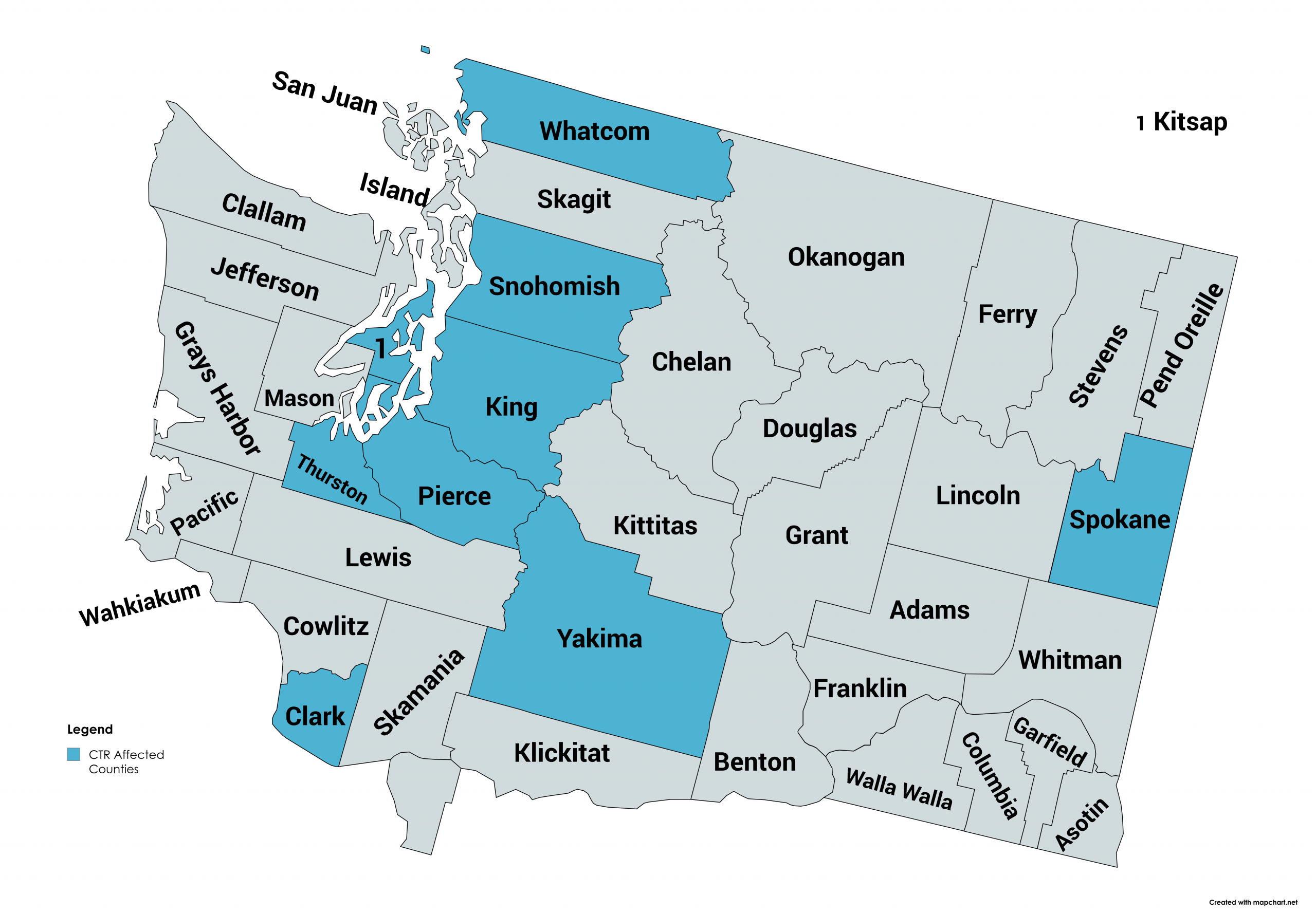
But wait, what is Commute Trip Reduction? Commute Trip Reduction (CTR) is a Washington State law and program that reduces drive-alone commuting by encouraging transit, ridesharing, biking, walking, and telework. Originally established in the 1990’s as part of Washington’s Clean Air Act, CTR was enacted to reduce congestion, improve air quality, and lower greenhouse gas emissions caused by people driving alone to work. The law requires large employers in the state’s nine most populous counties to develop and implement an employee commute program to reduce the number and length of drive-alone commute trips made to their worksites. CTR-affected programs often include employer-provided transit passes, vanpool subsidies, and bike benefits that help employees get to and from work.
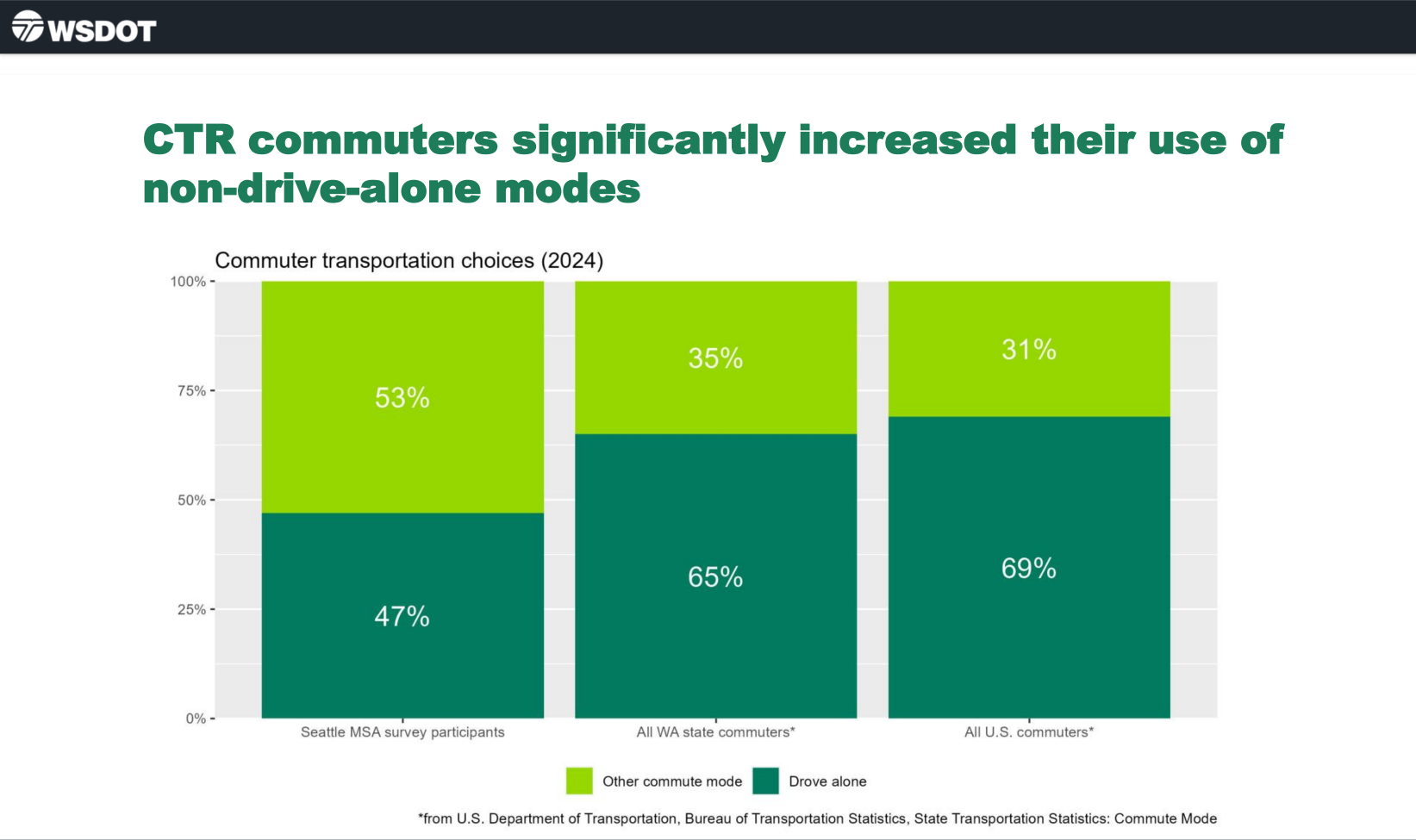
This program is effective in not only reducing the number and length of “drive alone” trips, but also has economic, health, and safety benefits. According to WSDOT, CTR:
- Prevents 313,000 metric tons of vehicle pollutants, increasing air quality
- Saved surveyed workers $135M in gasoline costs and $142M in parking fees yearly
- Increases commuter safety, as public transportation riders are less likely to be involved in a traffic collision
Why is HB 2307 important? Currently, worksites in the nine most populous counties are affected by the CTR law if they have 100 or more affected employees. An affected employee is currently defined as: A full-time employee who begins their regular workday at a major employer worksite between 6:00 a.m. and 9:00 a.m
Currently many shift workers, health care staff, and many service jobs employees are left out of this program, as they start their jobs outside of the 6:00am – 9:00am window defined in the law. Oftentimes, low income shift workers are excluded from benefits that may include transit pass programs, vanpool subsidies, and bike benefits that would help them get to and from work. Revising the Commute Trip Reduction Law would make the CTR program more equitable by reaching employees who are often paid less, and are more reliant on transportation options like walking, biking, and transit to get to work.
Commute Seattle’s 2024 Commute Study found that in Seattle, “Most CTR-affected respondents live in higher-than-average income households, with 43% of respondents reporting a household income of $180,000 or more. The lowest income respondents are the least likely to do remote work and have the highest share of public transit use.”
Transportation is the second largest household expenditure after housing. Imagine the impact an employer-subsidized ORCA card can have on a lower- income worker; who no longer has to stress over the daily cost of just getting to work. Additionally, CTR benefits can be the deciding factor for someone to try transit or bike to work for the first time that may lead to a shift in their transportation habits
HB 2307 will make our Commute Trip Reduction Law more inclusive of more employees and incentivize more workplaces to develop commute programs for the employees who need it most. This small but impactful change will make the program more equitable by reaching employees who are often paid less, and are more reliant on transportation options like walking, biking, and transit.
HB 2307 is currently scheduled for public hearing in the House Committee on Transportation on January 21st at 4:00 PM. You can support HB 2307 by taking one of the following action items:
Sign up for our newsletter and follow our social media to keep up to date on HB 2307 and how you can support this bill. Have a story about your employer-provided transit pass or commute benefit that you’d like to share? Let us know by emailing us at info@moveredmond.org.